
News
When Services Work Together, Victims/Survivors Regain Power
3 December 2025
A woman walks through the doors of a health center. It took her months to build up the courage. Before, she would have faced a maze of disconnected services, repeated her story over and over, and maybe given up. Today, things are changing. A coordinated network is emerging: immediate care, psychosocial support, legal and economic guidance. An integrated pathway. An ambitious vision coming to life.
Building a Continuum to Transform the Response to Violence
In West Africa, too many survivors of gender-based violence abandon their search for help before receiving the support they need. Services are hard to access, coordination is lacking, stigma persists – the barriers pile up at the worst possible time.
Since 2021, the PLURIELLES project and its partners have been building a comprehensive support pathway in Benin, Burkina Faso, and Mali. Community awareness, essential health care, psychosocial support, access to justice, and economic empowerment – these services no longer operate in silos. Stakeholders are learning to collaborate, coordinate effectively, and provide follow-up tailored to each person’s needs. The continuum is taking shape.
Already, more than 30,000 people have benefited. Some received full support, others joined prevention and awareness activities. Thousands accessed health care, and hundreds gained greater economic autonomy or initiated steps to assert their rights.
A Unique Multisectoral Alliance
This holistic approach is driven by a Canadian consortium with complementary expertise: Santé Monde for sexual and reproductive health and rights, Lawyers Without Borders Canada for access to justice and Socodevi for economic empowerment. With support from Global Affairs Canada, these organizations are mobilizing a wide network of local partners to transform fragmented services into a coherent system.
Creating a continuum of services takes more than goodwill. It means rehabilitating health centers, harmonizing practices, training hundreds of professionals, building reliable referral systems, and bringing together actors who have never worked side by side. Each country has its own realities, challenges, and opportunities. This groundwork is what makes lasting change possible.
Prevention Before Repair
The continuum begins in communities. Peer educators and local associations – including many women’s rights organizations – lead awareness campaigns on sexual and reproductive health, rights, and violence prevention. More than 5,700 people have participated in positive masculinities sessions, learning to recognize warning signs of violence, challenge harmful norms, and adopt healthier behaviors.
“Positive masculinity didn’t take away my strength – it gave me a new kind of strength: the strength to be fully myself, without a mask,” says CK, a Burkinabé proud to have become a model of listening and respect within his family.
This prevention work shifts social norms to reduce violence at its root, while giving community members – especially women and girls – the tools to protect their health, defend their rights, and know where to turn when they need help.
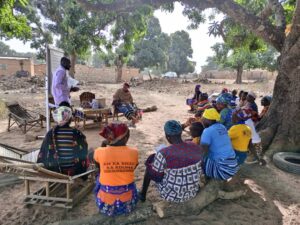
In Burkina Faso, a session on financial management within couples brings together members of the Munyu cooperative. After all, preventing violence also means talking about money and equality.
When Violence Occurs: A Pathway That Holds
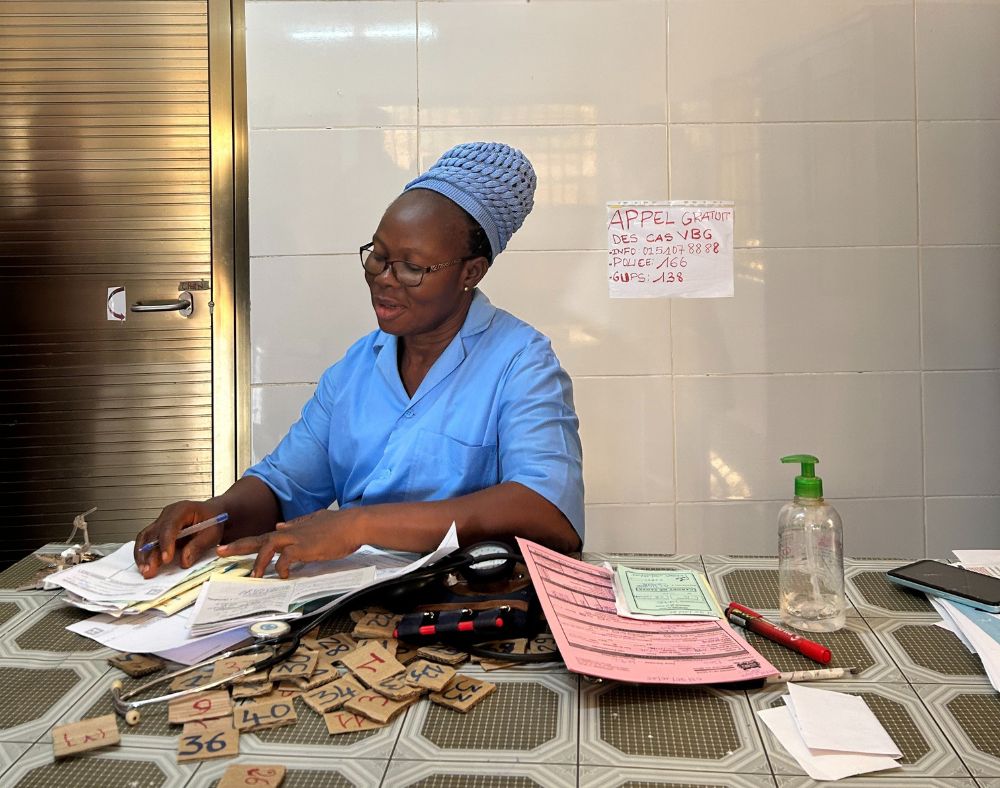
A health center is often the first place a victim/survivor dares to seek help, but it’s not the only entry point. Wherever they go – a women’s organization, a police station, a community relay – they should receive the same coordinated support. At the health center, they get immediate care and compassionate, nonjudgmental listening. From there, depending on their needs, the network mobilizes: psychosocial support, legal guidance, connections to women’s cooperatives.
Multisectoral protocols ensure everyone in the system knows their role and who to reach out to. Since the project began, more than 300 professionals across sectors have been trained to strengthen these connections, and coordination frameworks are being put in place for effective, sustainable implementation.
“Beyond legal aid, I received invaluable emotional and psychological support. I felt confident, full of hope, convinced I was not alone,” says a Beninese woman supported by a PLURIELLES partner organization.

Healthcare providers participate in emergency care training. Beyond clinical skills, confidentiality, compassionate listening, and referral practices are at the heart of the learning!
Communities Mobilized
In Benin, departmental forums bring together police, health workers, social services, and focal points for a coordinated response. Toll-free numbers circulate throughout communities to make reporting and referrals easier. Even health facilities not directly supported by PLURIELLES provide first aid and follow established protocols.
In Burkina Faso, women’s groups partnering with the project have adopted charters guaranteeing respectful, dignified reception of survivors. Women gain access to vocational training and economic resources. For many, this autonomy means the power to make their own decisions.
In Mali, mobile legal clinics and the Zero GBV app – which allows victims/survivors to report gender-based violence and access real-time assistance – are reaching more and more people. These tools bring justice and protection within reach for women and adolescent girls, even in remote areas.
Tangible Impact
After more than four years of action, PLURIELLES is changing the game. In fragile contexts, the project is breaking down silos, building trust across sectors, and fostering coordination between health, justice, and economic empowerment.
These advances are the result of patient, collective work:
- 90 health facilities strengthened → better quality care
- 450+ health providers and 80 managers trained → more accessible, appropriate services
- 4 multisectoral protocols adopted → coordinated response to violence
- 150 women’s groups supported → greater economic autonomy
- 44 advocacy actions and 19 national measures adopted → policies that evolve
- 266 young lawyers supported → justice closer to women’s rights
PLURIELLES will complete its activities in 2027, and the team at Santé Monde, Avocats sans frontières Canada, and Socodevi is already preparing what comes next. Because the goal isn’t just to respond to an emergency – it’s to change systems and give communities the capacity to carry the work forward. Government agreements, training delivered, best practices adopted, networks built, commitments made to the continuum: all of this must be consolidated so that this collective vision becomes a lasting reality.
Behind Every Number, a Story
Among the 30,000 people reached by the continuum are women who finally sleep without fear, adolescent girls making informed decisions about their bodies, and men choosing respect over violence. And around them, an entire network of multisectoral actors committed to continuing to strengthen the continuum in Benin, Burkina Faso, and Mali.
PLURIELLES proves that with an integrated approach, we can transform pain into resilience, and resilience into agency !
About PLURIELLES
PLURIELLES aims to strengthen sexual and reproductive health and rights in Benin, Burkina Faso, and Mali. It is implemented by Santé Monde, Lawyers Without Borders Canada and Socodevi, with support from Global Affairs Canada. In total, 503,464 women and adolescent girls are reached by its activities, which extend well beyond the continuum of prevention and holistic support for gender-based violence.
Learn more :
santemonde.org/plurielles